Have you ever felt worried about not saving as much as you wanted or stressed about dipping into your overdraft? Financial anxiety and stress hits close to home for many of us.
But fear not, because we’ve teamed up with financial psychotherapist Vicky Reynal, author of Money on Your Mind: The Psychology Behind Your Financial Habits, to bring you some practical advice on tackling those money worries head-on. Understanding the connection between financial wellbeing and mental health is crucial for maintaining both a healthy wallet and a healthy mind.
Focus on what you can control
“Firstly, try to focus your mind and efforts on the aspects of your finances that are within your control,” says Vicky. One powerful way to do this is by creating a simple monthly budget. “You can create a simple monthly budget that gives you a clear view of what you can afford to spend and what you can set aside for unforeseen expenses. This way, you know that your spending won’t compromise your ability to deal with the unexpected.”
Analysing your expenses is a key step in improving your financial wellbeing. Assess which expenses you can cut down on, such as unused subscriptions, and which you still want to prioritise. “There might be trade-offs that enable you to enjoy the money you have, cutting back on things you value less,” Vicky adds. This is an essential tip on how to improve your financial wellbeing.
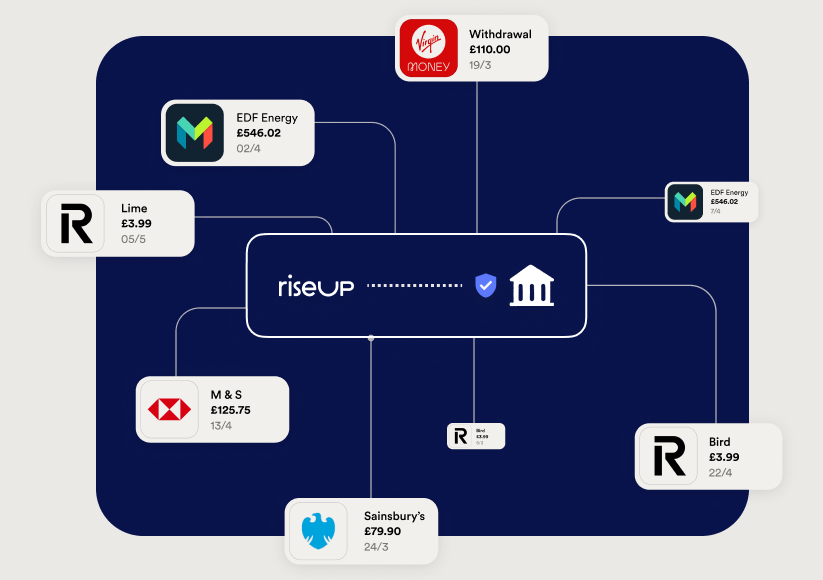
In RiseUp, you can see all your household accounts and expenses in one place, making it easier than ever to track your spending and savings.
Reality-check your worries
Next up, it’s time for a reality check. “Are you catastrophising, i.e., thinking about very unlikely and worst-case scenarios? Sometimes, talking about them with someone, or simply writing them down, can help you see that some of them might be unlikely or unreasonable,” Vicky suggests.
Understanding the difference between financial health vs financial wellbeing can help put your worries into perspective. Financial health is the objective state of your finances – your savings, debt, income and expenses. Financial wellbeing, however, is how you feel about your financial situation, including your sense of security and stress levels.
This distinction matters because you can have good financial health but still feel anxious if your financial wellbeing is low. Addressing both is crucial for effectively managing financial anxiety.
Seek out knowledge
“If you find that some of your anxieties have to do with a lack of knowledge, then try to reach out for information,” says Vicky. “Organisations such as Citizens Advice and local council services could have useful information and support services.” Increased financial knowledge is one of the main financial wellbeing benefits.
Attend a financial literacy workshop or seek insights from apps like RiseUp, which provide you with personalised insights and practical tips to help you navigate your financial journey with confidence.
Stay connected with others
Don’t be afraid to lean on your support system if you’re feeling anxious about your money situation. Whether it’s reaching out to a friend for a chat or joining an online community, having someone to lean on can make all the difference. Your social interactions can also help you understand what financial wellness means to you.
We host group challenges within the RiseUp community, where we share knowledge, hold each other accountable, and offer mutual support.
Celebrate small wins
Every step forward, no matter how small, is worth celebrating. Shout about your wins with your loved ones and in the online communities you’re part of. Then, if you can, treat yourself to that latte or indulge in a guilt-free Netflix binge. You deserve it. Celebrating these small victories is a key financial wellbeing tip.
Practice self-care
Remember to take care of yourself, both mentally and physically, if you’re feeling anxious about money. That might mean going for a walk, practising mindfulness, or treating yourself to a bubble bath.
It also might mean putting some money boundaries in place by “loud budgeting” so you can prioritise your financial goals. Self-care is essential and will make you feel better overall. Understanding the financial wellbeing benefits of self-care practices can greatly enhance your overall wellbeing.
Managing financial anxiety is no easy feat, but with a little bit of knowledge, a dash of self-care, a sprinkle of support, and the right tools in place, you’ll be well on your way to financial peace of mind.